- The Immediate Cost: How the Initial £100 Fine Applies
- The Escalation Timeline: Fines Beyond the Initial Penalty
- Late Payment Interest vs. Late Filing Penalties
- Appealing a Penalty: What HMRC Accepts as a Reasonable Excuse
- How Business Structure Alters Penalty Exposure
- Practical Steps to Take If You Missed the Deadline
- How Synergy Tax Accountants Helps You Resolve Filing Obligations
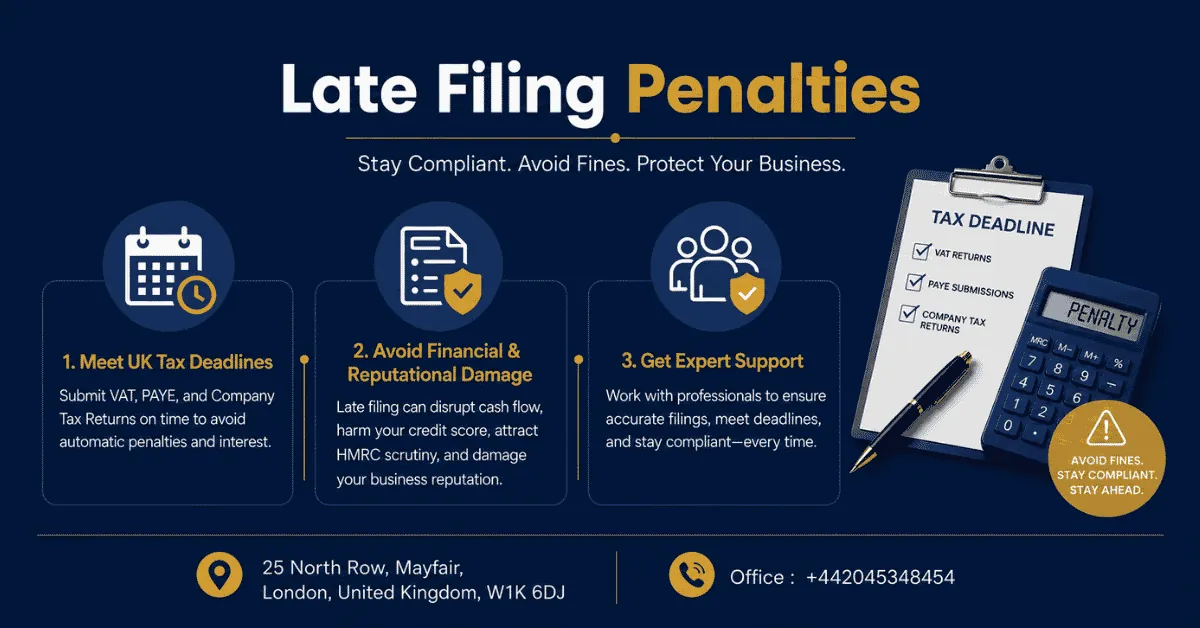
A failure to file your 2025/26 online tax return by the 31 January 2027 deadline will result in an on-the-spot £100 fine from HMRC, payable immediately, even if you owe them no tax or have already paid any amount due. HMRC will then impose further £10 per day penalties after three months and percentage penalties after six and twelve months if your return is still outstanding. Understanding the self-assessment late filing penalties escalation procedure and HMRC’s interpretation of a reasonable excuse can help sole traders and director-shareholders to resolve overdue filings before HMRC increases their liabilities. Knowing how Self Assessment Late Filing Penalties 2027 work in practice can help to mitigate additional charges.
The Immediate Cost: How the Initial £100 Fine Applies
HMRC takes tax payment deadlines very seriously as they are automated by their systems. That means that the first penalty for not submitting an online return for the tax year 2025/26 is a £100 fine starting from midnight on 31 January 2027. For partnerships, self-assessment late filing penalties are even harsher, as every partner should be charged a penalty of £100 for a partnership’s late filing. Thus, a partnership with 3 partners would be fined £300 for one late submission.
The Escalation Timeline: Fines Beyond the Initial Penalty
If you do not file your return immediately after missing the deadline, HMRC imposes compounding statutory charges depending on the length of the delay. By knowing how a late filing penalty for self-assessment progresses, it will become evident why you need to submit figures to HMRC immediately.
Three Months Late (1 May 2027)
HMRC charges you £10 per day for late submission of your return until the day your return is received by them. This can continue for up to a maximum of 90 days, meaning that you will be charged an additional £900 on top of the filing penalties. This makes the total filing penalties £1,000.
Six Months Late (1 August 2027)
In the event that your return is not filed until 1 August 2027, HMRC will impose an additional £300 penalty or 5% of the tax liability due, whichever is higher.
Late Payment Interest vs. Late Filing Penalties
Filing your tax return late is different from paying your tax late, despite both having different charges.
- Late Filing Penalty: This charge purely occurs when you miss the deadline to submit your tax return regardless of how much tax you owe. There are no other criteria involved.
- Late Payment Interest: HMRC will charge interest on any outstanding taxes and penalties from 1 February 2027 until they are paid in full.
However, paying an estimated amount towards your tax bill before 31 January 2027 will reduce the amount of late payment interest due, but not the self assessment late filing penalties if you have not submitted your tax return.
Speak to our Self Assessment tax return service
Our ACCA regulated team in Mayfair can review your situation and make sure you get it right first time.
Find out more Free consultationAppealing a Penalty: What HMRC Accepts as a Reasonable Excuse
You can appeal late filing penalties for self assessment if an unforeseen event beyond your control prevented you from submitting the return on time. You must submit your formal appeal within 30 days of the penalty notice issue date.
What HMRC Will Not Accept
- Not having enough money to pay your tax bill.
- Finding the HMRC online system or software confusing.
If your appeal against a late filing penalty self assessment is based on software or online failure, you’d be surprised how much information HMRC will ask for, including error codes or IT support records.
How Business Structure Alters Penalty Exposure
Sole Traders
Sole traders report all business profits via their personal Self Assessment return. Late filing fines directly impact personal income, and business bank accounts cannot be used to claim tax deductions on penalty payments, HMRC penalties are strictly non-deductible expenses.
Company Directors
Directors of limited companies often assume that because their company accounts are filed with Companies House, personal tax obligations are covered. However, salary, dividends, and director loans must be declared via a personal Self Assessment return. A late filing penalty self assessment notice is levied on the director personally, not the limited company.
Practical Steps to Take If You Missed the Deadline
Professional HMRC support for penalties can help with late submissions and penalty negotiations.
- Submit Return Immediately: This is the best option because it helps you prevent £10 a day penalties.
- Pay as You Can Afford: To reduce the amount of money owed to HMRC, pay the sum you can manage with your UTR to HMRC.
How Synergy Tax Accountants Helps You Resolve Filing Obligations
Managing outstanding tax returns while dealing with HMRC notices creates unnecessary stress for business owners. A personal tax accountant in London can prepare and file your return before the deadline, helping you avoid avoidable penalties. Synergy Tax Accountants provides direct support to bring your tax affairs up to date smoothly. Our team reviews your current tax position, prepares and submits accurate Self Assessment returns, and identifies legitimate allowable expenses to ensure you do not overpay tax. Where valid grounds exist, we can draft formal penalty appeals to HMRC on your behalf and arrange manageable payment schedules for outstanding tax liabilities.
Chartered certified accountants regulated by ACCA, based in Mayfair, London and Southend-on-Sea. This guide is general information, not personal advice. Contact us for advice on your situation.