Embarking on a career as a freelancer is exciting in the UK. Be it one of the trendy neighbourhoods of East London or in the heart of West London, the “gig economy” in the country is thriving. But for new immigrants, this excitement can potentially turn to disenfranchisement as soon as they come face to face with the UK tax system.
If you’ve just arrived in the UK, you may be asking yourself several questions: How do you register for taxes? What documents are needed? What does UTR stand for? Our team at Synergy Tax Accountants is committed to helping overseas freelancers to easily make their start in the UK market, while complying with tax obligations.
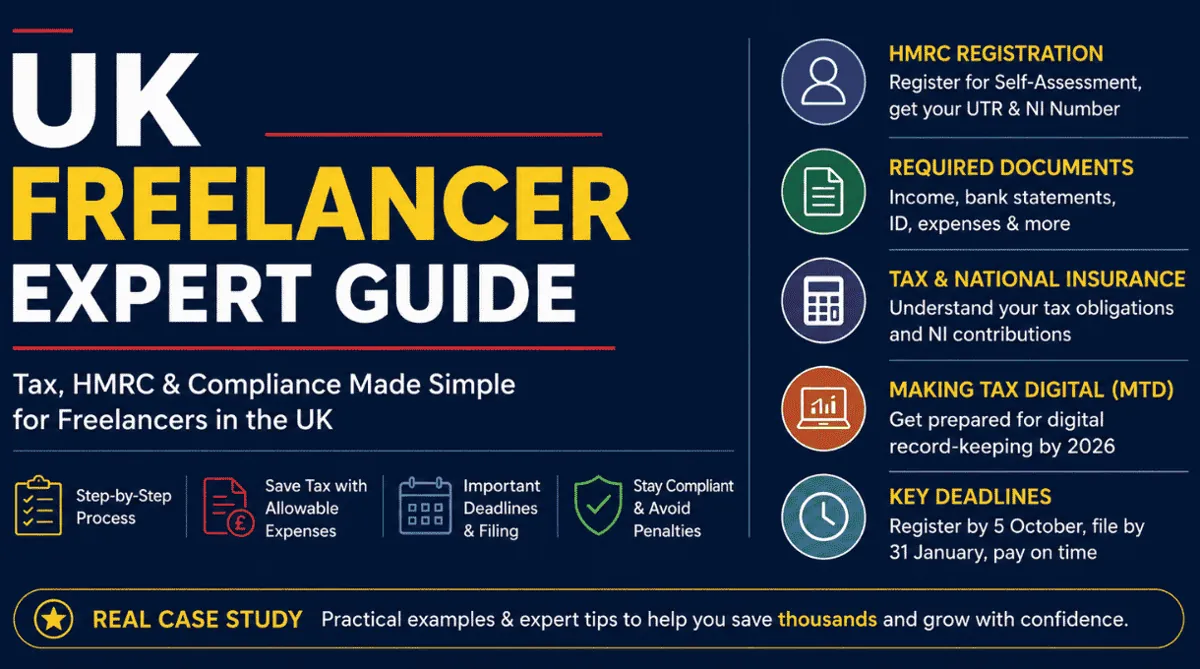
Tasks of the UK Freelancer:
1. The Need for UK Freelancers
While many other countries have either a linear taxation rate or pay tax at source, the UK’s self-assessment system is profoundly antihumanistic. Rather than being taxed through Pay As You Earn (PAYE) by your employer as an employee would be, the freelancer becomes his or her own Finance Director.
Tasks of the UK Freelancer:
- Register with HMRC:
Notifying the government of your status in earning untaxed income.
- Keep Records:
Having a computer or paper “trail” of transactions in sterling.
- File a Self-Assessment Tax Return:
File a return annually by January 31
- National Insurance (NI):
Paying National Insurance to receive the state pension and other benefits.
- Making Tax Digital (MTD):
Preparing to meet the requirements of “Making Tax Digital”, in which record-keeping will be made digital by 2026 for most taxpayers.
2. For your Accountant: Document Checklist
If you choose to come to an ACCA-accredited accounting company like Synergy Tax Accountants for help developing your case, your accountant acts as a mediator for you with HMRC. In order to prepare a case for you, they need some types of documents.
Personal Identification Documents
Your personal identification details will be required by the accountant acting for you to identify you and your status with HMRC
- Your NI Number:
The one assigned to you by HMRC for the social security system.
- Unique Taxpayer Reference (UTR number):
10-digit number allocated by HMRC when you begin Self-Assessment.
- Proof of Address & ID:
We’ll need ID verification documents, your passport and recent bills.
Taxable Income from Around the World
Many types of income are taxed in the UK on a worldwide basis. You will need:
- Receipts for Goods/Services Supplied:
To UK and non-UK customers.
- Statements from your Bank and/or Digital Account:
Payments received via your business bank account, PayPal and Stripe.
- Interest and Dividend Income:
Personal savings account and investment account statements.
Claimation of Business Expenses (The Key to Paying Less Tax)
Taxable profit is calculated based on “allowable expenses”. You will need to provide invoices and records for:
- Capital Purchases:
Large investments like laptops, screens, and office furnishings.
- Fees:
Monthly charges for software (Adobe, Microsoft 365), website hosting and insurance.
- Marketing:
Web and LinkedIn marketing, and travel costs incurred for meeting clients.
- Home Office Expenses:
If you use the apartment in London as an office, you can claim a percentage of your rent and utilities.
3.The 5-Step Process: Filling Out Your First UK Tax Return
The amateur can break down making a return into 5 steps. A low-cost tax advisor in London will ensure you have nothing to worry about.
- Register with HMRC:
It needs to be done before October 5th in the second year of business.
- Bookkeeping:
Using accounting software starts the bookkeeping as soon as the business opens.
- Tax Gap:
Your tax accountant does this exercise in mid-year to see how much tax you need to set aside.
- Tax Return Filing:
Your tax accountant files the tax return online for you and claims tax reliefs.
- Payment:
You pay the tax on 31st January, which also includes payment of tax on account for the following year’s tax bill.
4. A Case Study: Practical One: A newcomer’s success in London
Elena is a Spanish new arrival who arrived in London last May and began a freelancing career as a UX designer. She has worked for three clients in the UK and consulted for one more client in Madrid, earning £45,000 till now. Her receipts are kept in a shoe-box, and she has yet to register with HMRC.
Problems She Faces:
- Two Currencies: Elena doesn’t know how to convert her salary to GBP.
- Failure to Register: Elena was not aware of UTR.
- Lack of Allowances: Elena was not aware of the fact that she was able to reduce her tax burden since the rents in London are high.
What Synergy Tax Accountants Does to Help:
We have organised her “shoebox” and made sure that she has registered for Self-Assessment. We also used the UK-Spain Double Taxation Treaty to avoid paying dual tax on her income in Madrid. Lastly, we have also identified an additional £4,000 of allowable expenses.
Result: Elena will pay £3,500 less in taxes. But most importantly, she will use our cloud system next year.
5. Don’t Make These Mistakes as a Beginner
- Primary Payment Confusion:
Co-mingling payments, not in one bank, and not using accounting software, will cause an audit problem.
- Deadline Missed:
HMRC will penalise your company with an automatic £100 late fee if you are late by even a minute.
- Lack of Plan for Payments on Account:
If your liability is more than £1,000, HMRC requires half of your tax liability for the next year to be paid. The accountant will help you with the “double whammy.”
Chartered certified accountants regulated by ACCA, based in Mayfair, London and Southend-on-Sea. This guide is general information, not personal advice. Contact us for advice on your situation.